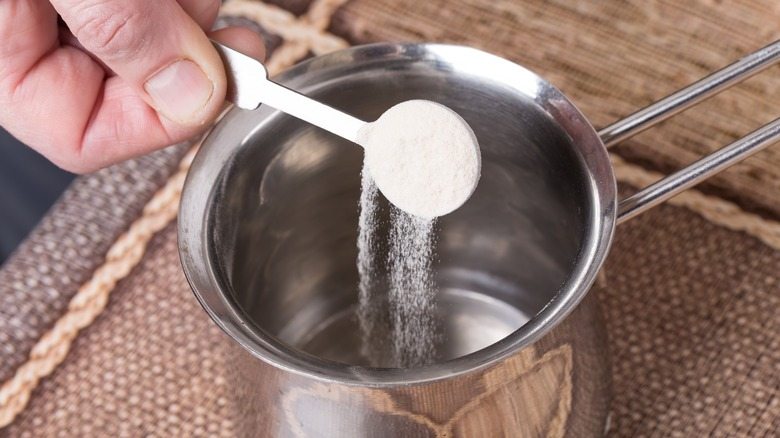
Those small packets of unflavored gelatin you keep for desserts can actually serve another purpose—feeding your plants.
Gelatin is made from animal collagen, which means it’s rich in protein. And protein, when broken down in soil, becomes a source of nitrogen—one of the most essential nutrients for healthy plant growth. Nitrogen is what keeps foliage green, supports vigorous development, and helps plants avoid that pale, yellowed look that signals deficiency.
Unlike phosphorus and potassium, which tend to remain stable in potting soil, nitrogen is easily lost from potting soil. It can wash away with watering or dissipate into the air. That’s why plants often need nitrogen replenished more frequently than other nutrients. A slow, steady supply is ideal, rather than irregular bursts.
This is where gelatin becomes useful. As an organic material, it decomposes gradually. Soil microorganisms break down the protein into forms of nitrogen that plant roots can absorb over time. Because this process is natural and slow, the risk of overfeeding or “burning” plants is much lower compared to synthetic fertilizers.
In fact, trials conducted on dozens of plant species over an extended period showed that gelatin can function as a reliable nitrogen source for indoor plants. The results indicated steady growth, healthy coloration, and no significant nutrient imbalance when appropriately used.
How to use it
A simple method works best:
-Dissolve one packet of unflavored gelatin in about a cup of hot water.
-Add more water to make a whole quart (about 1 liter).
-Let the mixture cool.
-Water your plants with this solution once a month.
Plants showing signs of nitrogen deficiency—such as yellowing leaves—may begin to look healthier within a few days as soil microbes convert the gelatin into usable nutrients.
For best results, the potting mix should contain some living microorganisms. A bit of compost or garden soil mixed into the potting medium helps speed up the breakdown of organic matter, allowing plants to access nitrogen more efficiently.
While tossing protein-rich kitchen scraps into pots would technically achieve a similar result, gelatin offers a cleaner, odor-free, and far more practical alternative for indoor gardeners.
In short, gelatin can act as a gentle, time-release nitrogen booster, helping houseplants stay green, lush, and vigorous.
 Discuss
More news
Discuss
More news