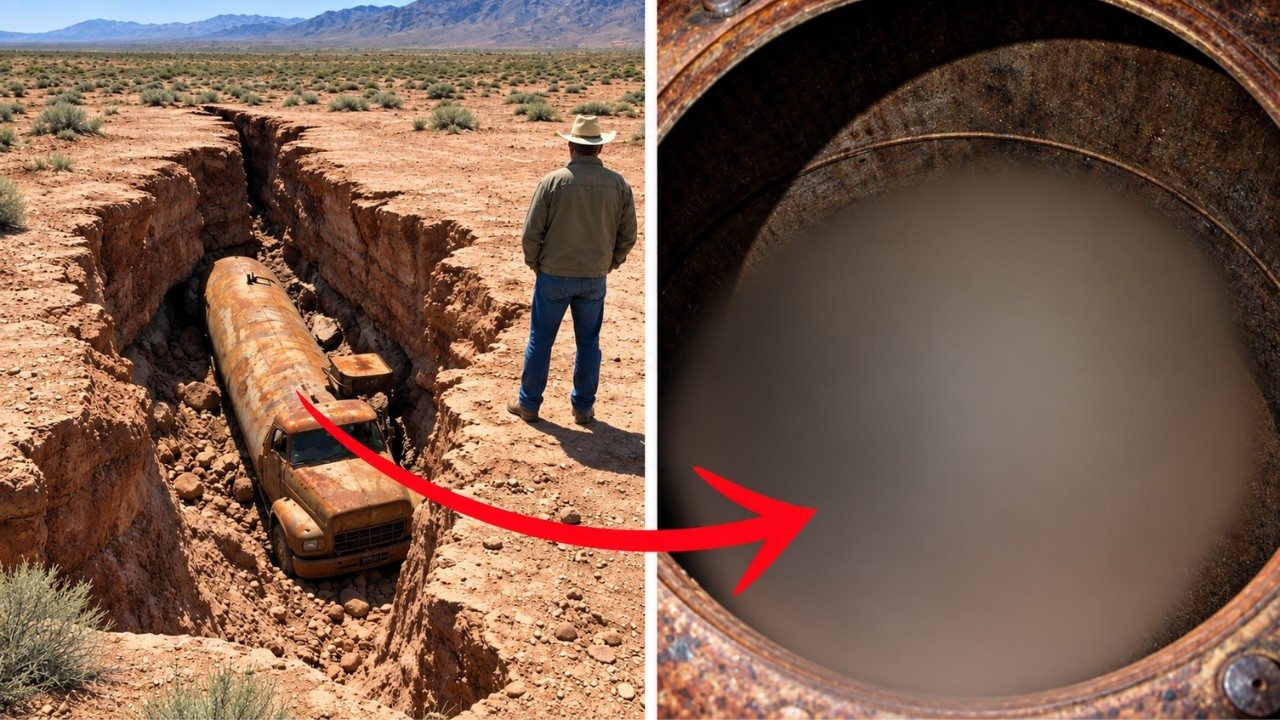
For over twenty years, Tom Fleming owned a sprawling ranch in a remote stretch of Nevada. Knowing every inch of his land like the back of his hand, he immediately set out to check for structural damage after a powerful earthquake shook the region.
Not far from a dry riverbed, Tom spotted something surreal: a massive, gaping fissure in the ground.
The quake had split the earth wide open, exposing a metallic glint reflecting the sunlight from deep beneath the tumbled rock and dirt.
The Unburied Machine
Tom called his ranch hands over, and together they began carefully clearing away the heavy rocks and debris.
Before long, a long metal cylinder emerged from the dirt, followed by a rusted cab. It was an old fuel tanker truck, almost entirely buried deep underground.
At first, the discovery seemed like nothing more than an abandoned relic from another era. But as they brushed off the dust, one of the workers noticed something bizarre.
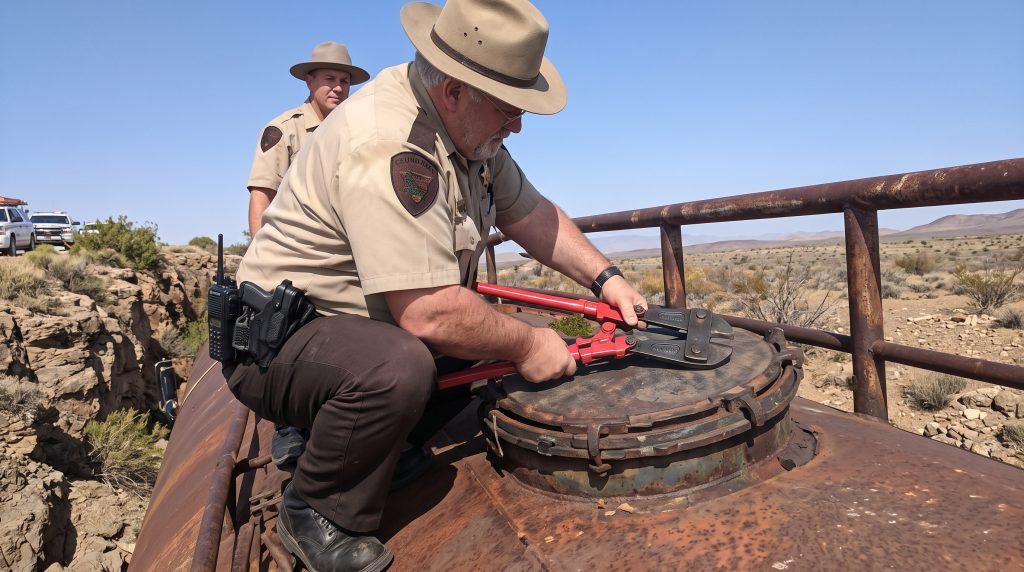
The main hatch on top of the tanker wasn’t just closed—it was tightly sealed and bound with thick strands of heavy metal wire.
Why would anyone go through the trouble of sealing an empty fuel tank like that before burying it in the desert?
The Moment the Hatch Opened
Deciding not to take any unnecessary risks, Tom called the county authorities.
Sheriff Ray Salinas arrived at the remote site shortly after. After inspecting the strange setup, he ordered everyone to step back. Using heavy-duty cutters, the sheriff snapped the old wire and pried open the heavy hatch.
He aimed a high-powered flashlight beam down into the dark interior of the tank.
Seconds later, the sheriff recoiled sharply.
His face drained of color as he gripped his radio and ordered everyone to evacuate the immediate area.
What Was Inside
There were no remains at the bottom of the tank. Instead, illuminated by the flashlight beam, sat rows of heavily sealed, military-grade storage vaults and bound ledger books—stamped with top-secret federal classifications and wrapped in the exact same heavy wire.
The victim wasn’t a person, but an entire life erased by a massive historical cover-up.
Investigators arrived to examine the vehicle. A surviving serial number on the truck frame unexpectedly linked the desert discovery to a legendary, long-forgotten cold case.
In 1954, 31-year-old Earl Whitmore—a fuel truck driver and father to a young daughter—vanished without a trace along with his entire rig. For over seventy years, rumors claimed Earl had simply abandoned his family or absconded with stolen money.
His daughter, June, spent her entire life carrying the painful belief that her father had willfully deserted her.
The Unsent Confession
The contents of the tanker finally brought the truth to light.
Deep inside the waterproof vaults, investigators uncovered Earl’s original logbooks alongside an unsent, handwritten letter tucked into a metal briefcase.
In the weeks leading up to his disappearance, Earl had stumbled upon a massive illegal smuggling operation run by his bosses, who were using commercial fuel trucks to transport stolen military assets across state lines.
Earl had carefully gathered evidence and planned to turn it over to federal authorities. But before he could make the call, he was ambushed on a remote desert road.
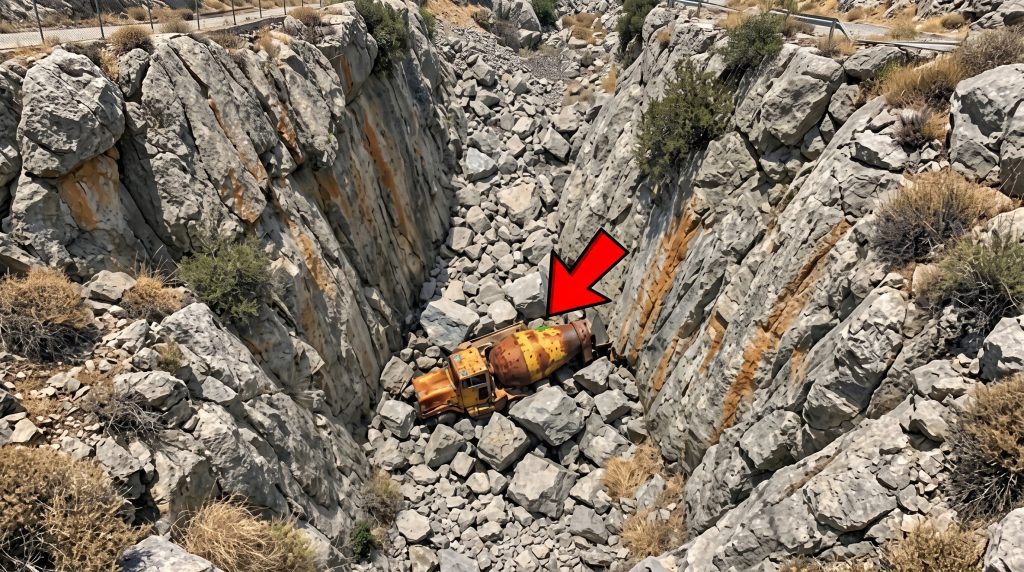
The smugglers hijacked his rig, loaded it with their most incriminating evidence, and buried the entire truck deep in the desert canyon—planning to dig it up once the heat blew over. They framed Earl as a runaway thief, ensuring no one would ever look for him or his truck.
Earl had barely escaped the ambush with his life that night, fleeing under a false identity to survive, but leaving behind a paper trail he thought was lost forever.
More than seventy years later, nature exposed the buried conspiracy.
An earthquake transformed a carefully concealed crime scene into a discovery that finally gave the elderly June the answer that had haunted her for a lifetime: her father was never a criminal who abandoned his family—he was a hero who risked everything to expose the truth.
 Discuss
More news