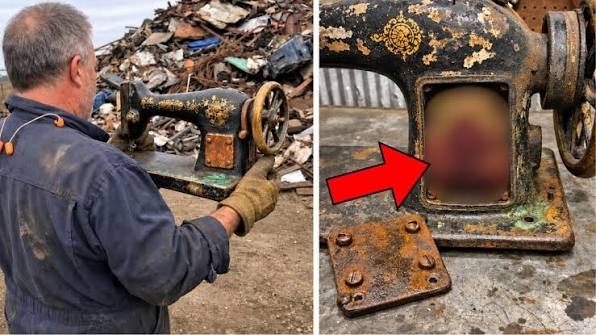
On the outskirts of Pittsburgh, Robert Delaney sorted another shipment of scrap metal when he noticed an old cast-iron sewing machine among the mangled parts. The wooden body had long since rotted, the paint peeled, and the metal was covered in rust. But the find unexpectedly reminded him of his mother, who once spent her nights sewing and darning clothes on the same machine.
Instead of sending it to the press, Robert took the mechanism to the workshop. As he examined the heavy base, he heard a strange thud inside. Below was a small metal plate secured with unusual screws.
After unscrewing them, the man found a hiding place. A bundle of faded red cloth fell out. As soon as it was unwrapped, six teardrop-shaped green stones scattered across the workbench. These were no cheap trinkets: each stone stood out for its unusual density and impeccable cut. One held a fragment of an antique gold frame.
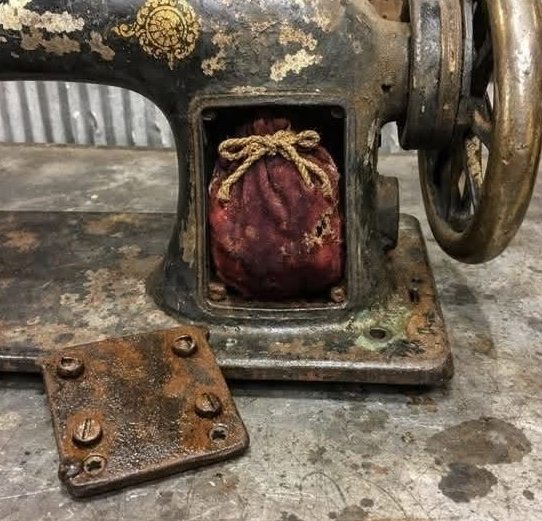
Using the address from the scrap metal documents, Robert found a woman named June. Hearing the description of the machine, she fell silent for a long time. Then she asked about the small picture of a bird on the reel near the wheel. Robert cleaned the metal of dust – the sign was indeed in place.
Soon June arrived with a family photo and an old sewing basket. The picture showed luxurious royal clothing, decorated with six identical pendants. Her great-grandmother Eliza once worked as a dressmaker at the European court, but after the queen fled the country, six emeralds disappeared. Suspicion fell specifically on Eliza. The woman left for America, and her family carried the stigma of thieves for decades.
Now it seemed the terrible family secret had finally been confirmed.
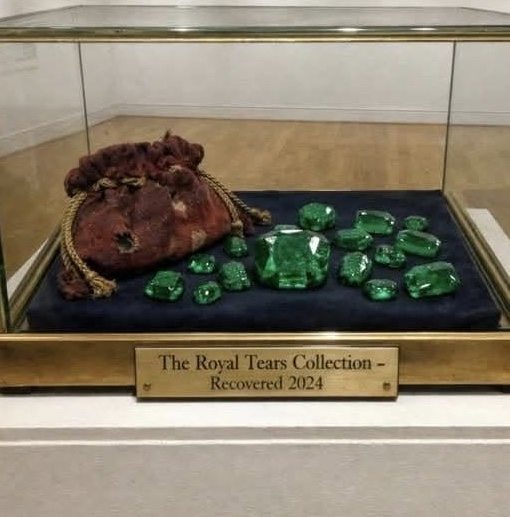
However, historians, after studying the jewelry and archival documents, found an unexpected clue. In the old letters of another court dressmaker, Martha wrote a confession shortly before her death.
It turned out that Martha was jealous of Eliza and decided to set her up. While repairing the machine, she secretly hid the emeralds in a cavity beneath the cast-iron base. She planned to report the theft and have her searched so that her rival would be accused of the crime. But a political coup destroyed her plan: Martha was expelled from the palace before she could carry it out.
Eliza took the machine overseas, not even suspecting that she had spent decades working on treasures that had disgraced her name.
After almost a hundred years, the truth has finally been revealed. The emeralds were donated to the historical fund, Robert received a reward that allowed him to retire, and the old typewriter was exhibited in the museum.
Now she is not a symbol of royal theft, but a monument to a woman unfairly considered a thief for almost a century.
 Discuss
More news