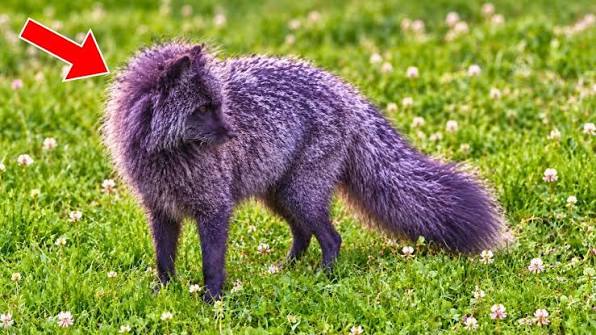
A routine walk along the edge of a forest near the small American town of Hastings, Michigan, unexpectedly turned into an unforgettable experience for a wildlife photographer. At twilight, as the last rays of light faded among the trees, an unusual animal emerged from the deep shadows. Its pointed ears, elongated muzzle, and bushy tail suggested it belonged to the canid family—but one detail defied expectations: its fur appeared a vivid shade of purple.
The photographer acted quickly, capturing several high-resolution images. A moment later, the mysterious creature vanished into the dense woods, leaving behind only the photographs, which soon sparked a heated reaction online.
When the images appeared in an online wildlife observation database, users split into two camps. Some insisted that the photos had been digitally altered or distorted with color filters. Others speculated that the photographer had captured a species unknown to science—or perhaps an animal with a rare genetic mutation. The creature’s unusual hue seemed so implausible that such skepticism was entirely understandable.
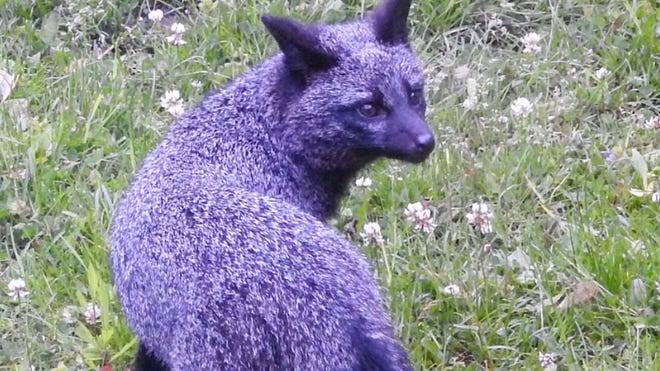
Eventually, the story caught the attention of wildlife specialists and researchers affiliated with state conservation agencies. Experts began analyzing the photographs, examining the animal’s coloration, body shape, and the lighting conditions. Gradually, a potential scientific explanation for the mystery emerged.
According to this theory, the animal in the photographs could be a gray fox—a species native to North America. This unusual appearance has been attributed to melanism—a rare genetic trait that causes an overproduction of dark pigment in an animal’s tissues, often resulting in a coat significantly darker than normal. The purple hue, meanwhile, likely stems from a combination of the near-black fur, the evening light, and how the camera captured the colors.
However, it is important to distinguish between a plausible explanation and sensational claims. An unusual coat color alone does not prove a rare mutation, nor does it make a specific sighting extraordinary. Drawing such conclusions requires solid data and independent expert verification.
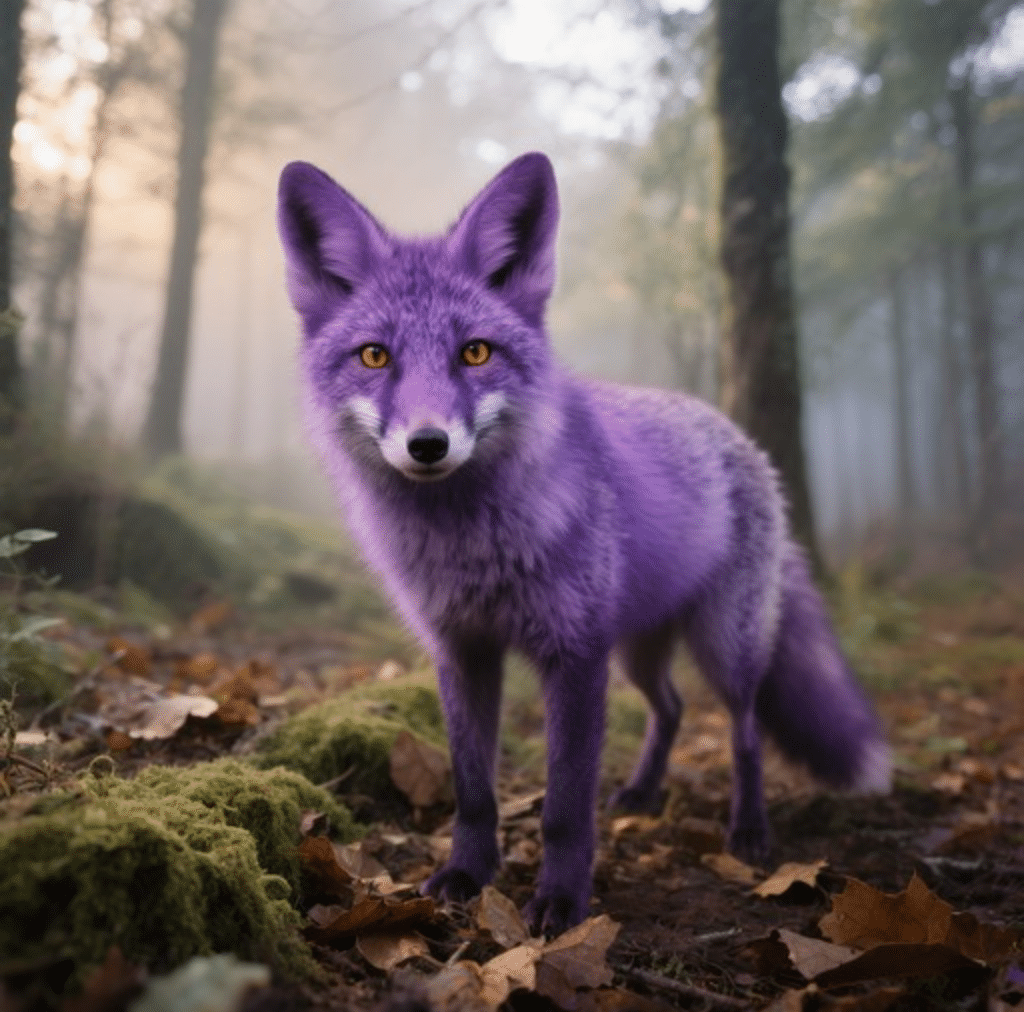
Nevertheless, this story serves as a clear reminder of how deceptive first impressions can be. What might appear to be a fantastical creature in the twilight often turns out to be a real animal, its appearance transformed by how light interacts with it.
On the edge of a forest in Michigan, a photographer captured an image that left many questioning their own eyes. While definitive conclusions would require more evidence, the mystery itself reminds us that nature can still surprise us—even in places we might assume have been fully explored.
 Discuss
More news