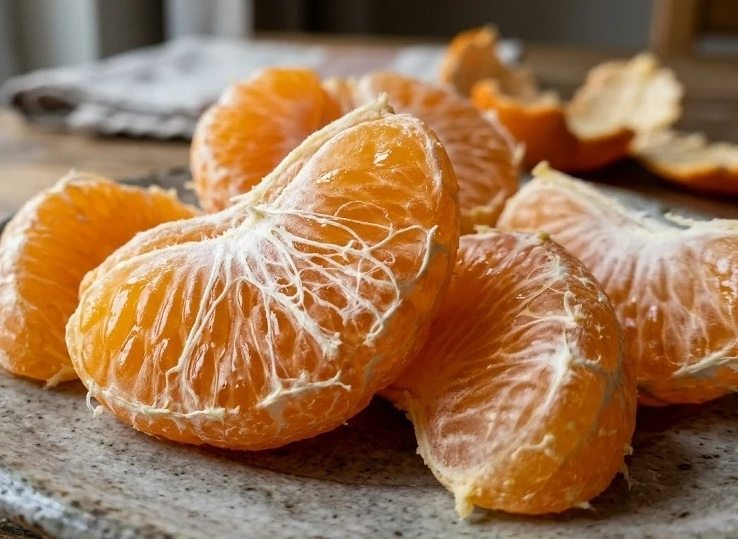
Mandarins are one of the most convenient fruits to enjoy in the winter. You peel one, separate it into segments, and eat it in minutes. However, some people cannot fully enjoy the citrus without first removing every single white fiber from each segment—a process that can sometimes take longer than eating the fruit itself. But is it actually necessary to remove these strands?
Many people find the white fibers unpleasant, so they meticulously clean each segment, aiming to leave only the juicy pulp. Some do this out of habit, while others are convinced that it makes the mandarin taste much better. Nutritionists, however, advise against removing this part of the fruit.
The white fibers are not useless.
The white layer covering mandarin segments is called the “albedo.” It contains dietary fiber and pectin, both of which benefit the digestive system. For this reason, there is no need to waste time picking off these thin white strands.
In fact, eating the mandarin with these fibers lets you get even more nutritional value from the fruit. They support healthy bowel function and aid digestion. So, next time, you can peel the mandarin and eat it as is, without the painstaking cleaning process.
Why do the white strands sometimes taste bitter?
If the white part of a mandarin tastes particularly bitter, it doesn’t necessarily mean the fruit has spoiled or has been sitting around too long. The white fibers and membranes of citrus fruits contain natural compounds that can produce a bitter flavor. The intensity of this bitterness depends on the specific variety and the characteristics of the individual fruit.
If mandarins have lost their freshness—becoming dry or unpleasant in taste—it is best not to eat them. Citrus fruits that have become too soft or have been sitting around for a while can still be used in baking, as long as they show no signs of spoilage.
How are mandarins produced without those white fibers?
Those who prefer perfectly peeled mandarin segments are likely familiar with canned versions. They look virtually flawless—no white threads, membranes, or excess skins.
However, few people stop to consider how they achieve this result. During the industrial production of canned mandarins, the segments undergo a special treatment. A chemical process removes the membranes: the segments are treated with a solution of sodium hydroxide (caustic soda), which helps separate the thin skins from the fruit’s flesh. Afterward, the product is thoroughly rinsed and processed further according to the specific manufacturing protocol.
So, those white threads on a fresh mandarin are by no means a flaw. On the contrary, they are a natural part of the fruit, and there is absolutely no need to remove them. You could even use the time you save to enjoy another juicy segment instead!
 Discuss
More news