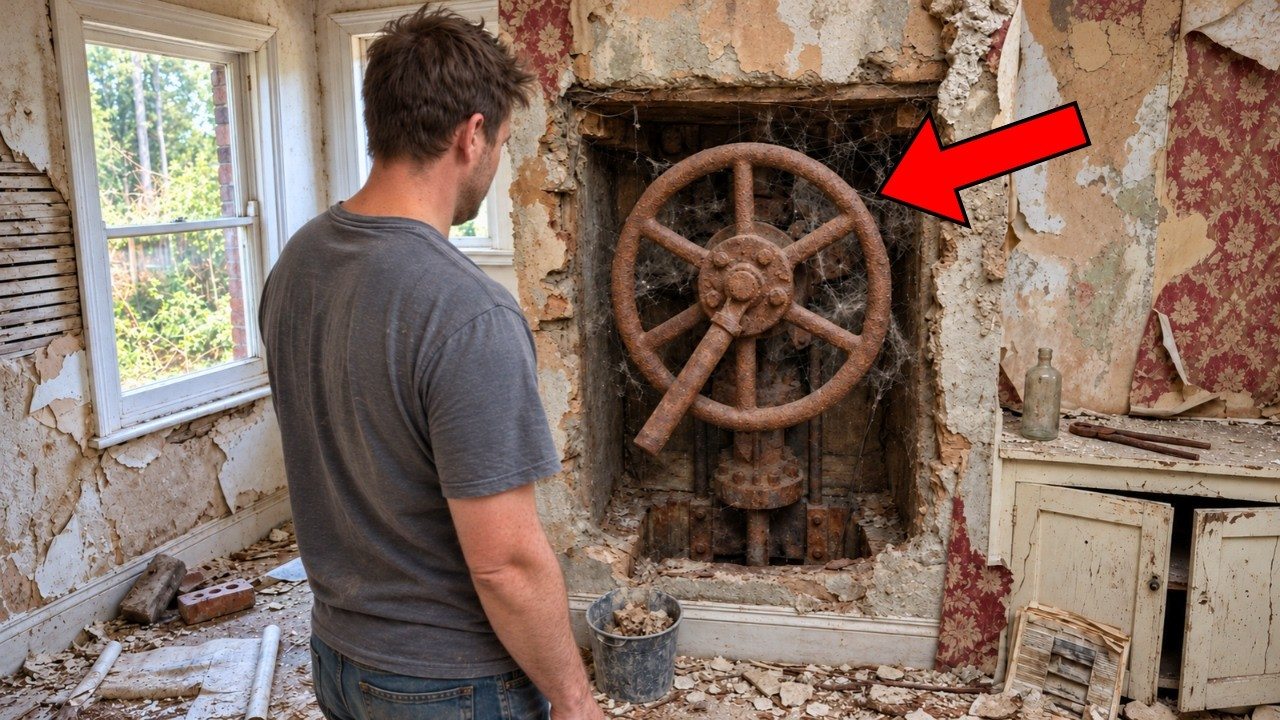
Kyle Steadman invested nearly all his savings into an old farmhouse built in 1902. With winter fast approaching, he hurried to get the building into shape so his family could move into a warm, comfortable home. While removing some kitchen paneling, he unexpectedly discovered a massive cast-iron flywheel connected to a metal shaft that ran straight down into the stone foundation.
Unable to find an explanation, Kyle decided to test the mechanism. He strained to turn the heavy wheel, and a dull thud echoed from deep within the house. The floor began to tremble, and a growing hum rose from beneath the ground.
Kyle and his brother headed down to the basement. The vibration came from beneath the wooden floor; after prying up the boards, they uncovered an old iron hatch. Beneath it lay a narrow stone staircase leading into an unknown underground chamber.
Down below stood a colossal cast-iron machine. As the shaft spun faster, water hissed and burst from the old pipes. Kyle’s brother started to move closer, but Kyle stopped him abruptly—the situation looked dangerous. Shouting over the din, he told his brother to return to the kitchen immediately and shut down the mechanism.

As soon as they turned the wheel the other way, the flow subsided, the shaft stopped, and the water drained into a hidden channel.
The next morning, experts arrived to examine the discovery. Behind the massive turbine, they found an antique electric generator, complete with ceramic insulators and wiring remnants. It turned out a private hydroelectric plant had been preserved beneath the farmhouse—built long before an electrical grid reached the area.
While researching the property’s history, Kyle uncovered blueprints and photographs dating back to the early 20th century. They explained the house’s unusual layout: later additions had gradually concealed the power-generating system, and the control valve had been relocated to the kitchen for easier access.
In one yellowed photograph, the original owners sat at their dining table, lit by an electric lamp powered by a stream that flowed beneath the house.
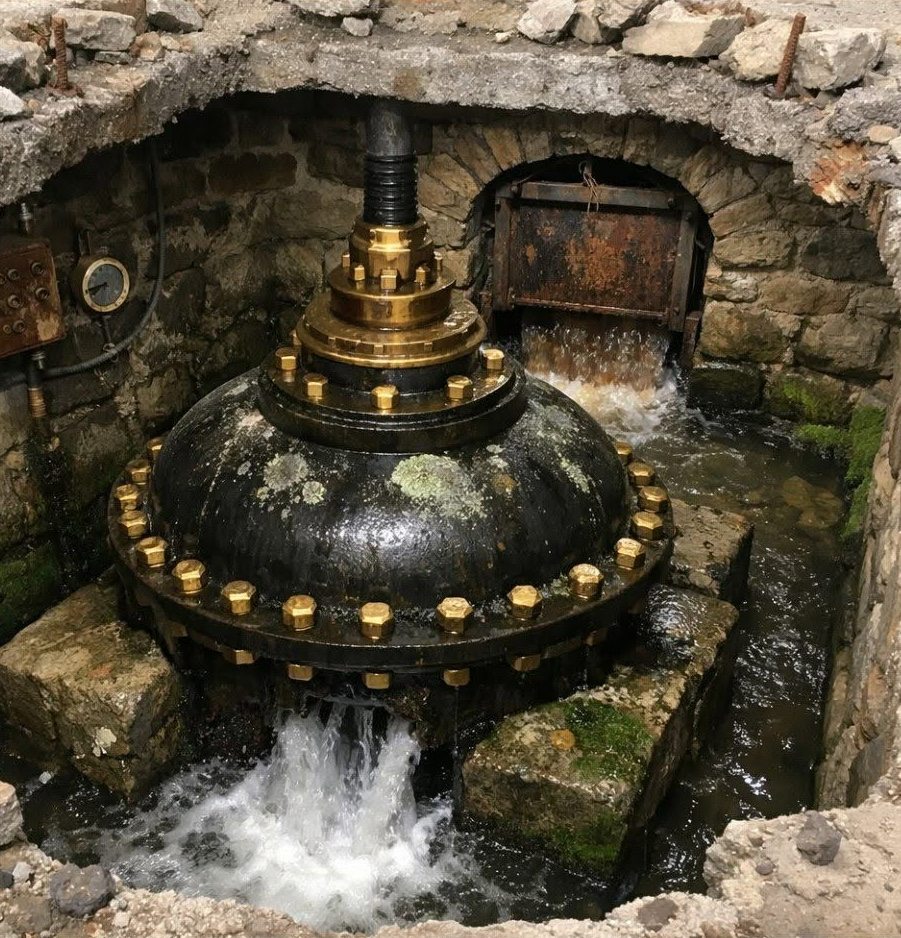
Instead of an expensive interior renovation, Kyle and his wife decided to restore the historic system. Over several months, artisans cleared the water channels, repaired the turbine, and installed a modern, compact generator.
When the family finally moved in, Kyle placed the dining table in the exact spot where the previous owners had posed nearly a century earlier. As an electrician stood by to test the system, Kyle carefully turned the restored flywheel.
Soon, a faint vibration rippled through the floor, and the kitchen was flooded with light. Water from the very same stream was once again generating electricity—as if the old house had, for a brief moment, stepped back into the past.
 Discuss
More news