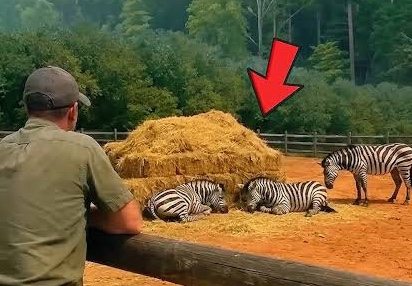
A hot morning in central New Mexico began as usual for zookeeper Troy Morton. His duties included feeding the animals, and that day, he had prepared fresh, fragrant hay for the herd of zebras. Because their regular feeding trough was undergoing repairs, he placed the hay in a shaded corner of the enclosure.
However, what should have been a routine breakfast suddenly turned into an alarming incident.
A young female, who usually looked forward to the zookeeper’s arrival, was the first to approach the food. But the moment she lowered her head toward the hay, she recoiled sharply. She froze, staring intently at the feed, and flatly refused to eat. Noticing her reaction, the other animals also stopped, hesitating to come any closer.
At first, Troy couldn’t fathom what had frightened them. From a distance, the hay appeared perfectly normal—dry, clean, and free of any foreign objects. Still, not wanting to take any chances, he moved the herd to an adjacent enclosure, where fresh hay from a different storage area was already available.
The zebras began to eat immediately. The young female, however, remained agitated; even by the safe feeding trough, she was in no hurry to lower her head.
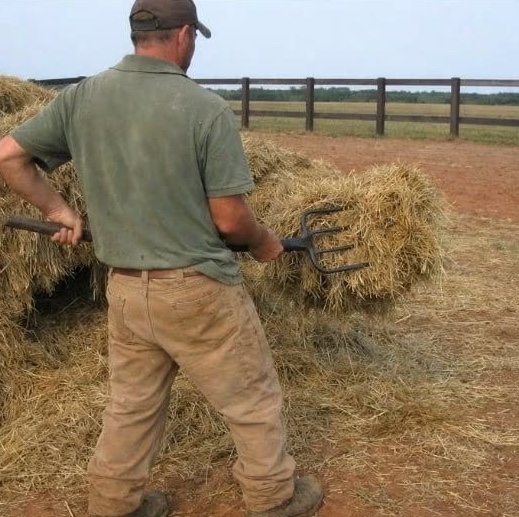
Troy called for a veterinarian, secured the gate between the enclosures, and returned to the suspicious pile of hay. Armed with a pitchfork, he carefully lifted a few bundles.
What he saw made him jump back instantly.
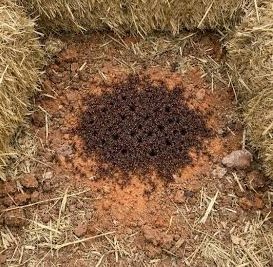
From the dark earth beneath the hay, thousands of reddish-brown insects began to crawl out. They swarmed the area, rapidly scurrying up the metal tines of the pitchfork. Troy immediately grabbed his radio and alerted a colleague who was heading toward the enclosure with a cartload of feed.
Pest control specialists discovered that a massive colony of red fire ants was hiding beneath the hay. These aggressive insects had established themselves in a shaded spot, sustained by a hidden leak in an underground irrigation pipe that provided the moisture they needed.
These ants were what the young zebra had most likely encountered during her first attempt to eat. They had managed to sting her repeatedly around her lips and nostrils. The painful stings caused severe irritation, leaving the animal fearful of even the safe, uncontaminated feed.
Thanks to the zookeeper’s prompt response, the spread of this dangerous colony throughout the zoo was prevented—the insects could easily have been transported to other enclosures via the hay carts.
After the leak was repaired, the specialists eliminated the nest, and a veterinarian treated the zebra’s inflamed muzzle. Only after some time did the young female cautiously approach a clean feeding trough, lower her head, and finally begin to eat.
What initially seemed like a simple refusal to eat breakfast turned out to be a warning that helped avert far more serious consequences.
 Discuss
More news