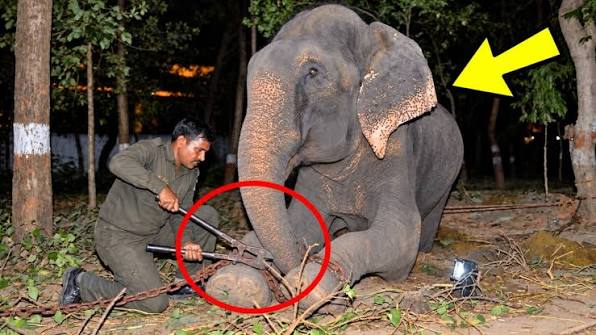
Kaavan spent thirty-five years behind the concrete walls of the Marghazar Zoo in Pakistan. Brought from Sri Lanka as a calf, he had been a “diplomatic gift.” Instead of a life within a herd, he was confined to a cramped enclosure, bound by iron chains, and forced to endure the constant presence of humans who made him perform circus-style tricks.
His only solace was a female elephant named Saheli. For twenty-two years, they comforted one another, gently touching trunks. But then, Saheli died from a severe infection—the result of injuries sustained from her chains. Kaavan was left completely alone.
Following her death, his behavior shifted. He would spend hours swaying from side to side, pressing his forehead against the wall. While zoo visitors mistook this for an amusing quirk, experts recognized it as a sign of profound psychological distress. For eight years, Kaavan saw no other elephants. His feet suffered from ailments, and any hope for a normal life had all but vanished.
A turning point arrived thanks to a campaign by animal rights activists. The captive elephant’s story gained international attention, drawing singer Cher’s involvement. After a protracted legal battle, the Islamabad High Court ordered his release.
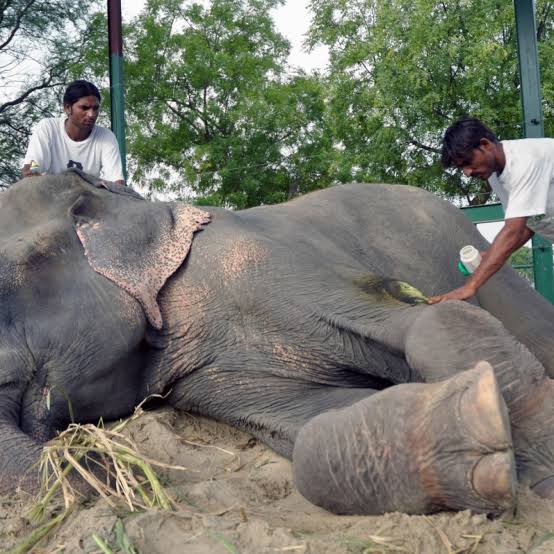
However, transporting an animal of such immense size proved incredibly difficult. Given his fragile health, Kaavan could not be placed under deep anesthesia. Furthermore, he did not trust humans and was prone to aggression. The only viable option was to coax him—voluntarily—into a specialized transport container.
Veterinarian Dr. Amir Khalil from the organization Four Paws took on this task. Rather than resorting to threats or coercion, he chose patience. Every day, the man spent time near the elephant, offering him bananas and talking to him. Then, one day, the veterinarian found an unusual way to build a connection: he began quietly singing Frank Sinatra—”My Way,” in particular.
Gradually, Kaavan stopped viewing the man as a threat. He began to approach more closely, take food from his hands, and let the veterinarian stay by his side. A few weeks later, something incredible happened: the elephant walked into a massive metal crate on his own, calm and composed—without sedation, shouting, or force.
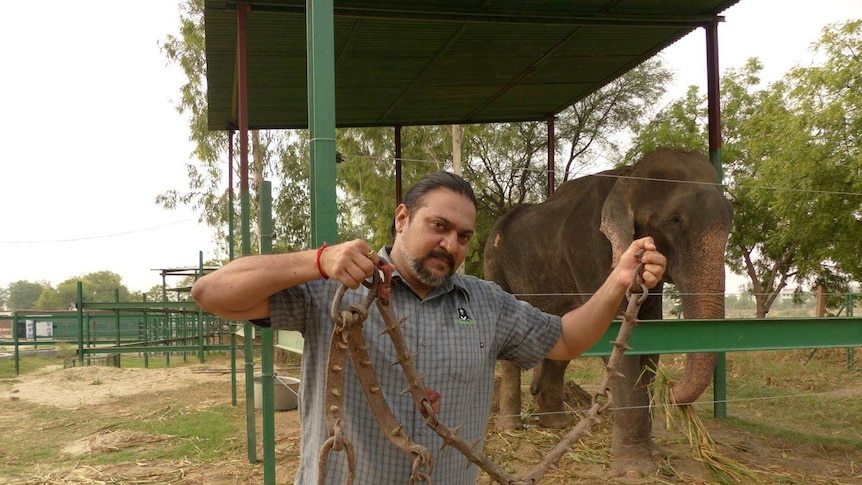
In November 2020, a military transport plane carried him to Cambodia, to a sanctuary set within a tropical forest. When the container doors opened, Kaavan stepped onto soft grass for the first time in decades—unencumbered by the clanking of chains.
But the most touching moment was yet to come.
At dawn, the elephant approached a fence, and on the other side stood a female elephant. For a while, the two animals gazed at one another. Then, Kaavan cautiously reached his trunk through the wooden bars.
She responded in kind.
Their trunks met in a gentle touch. After eight years of solitude, Kaavan once again felt another elephant’s touch. In that instant, the story of a captive ended, and a new life began for a creature who was, at long last, allowed to be himself.
 Discuss
More news