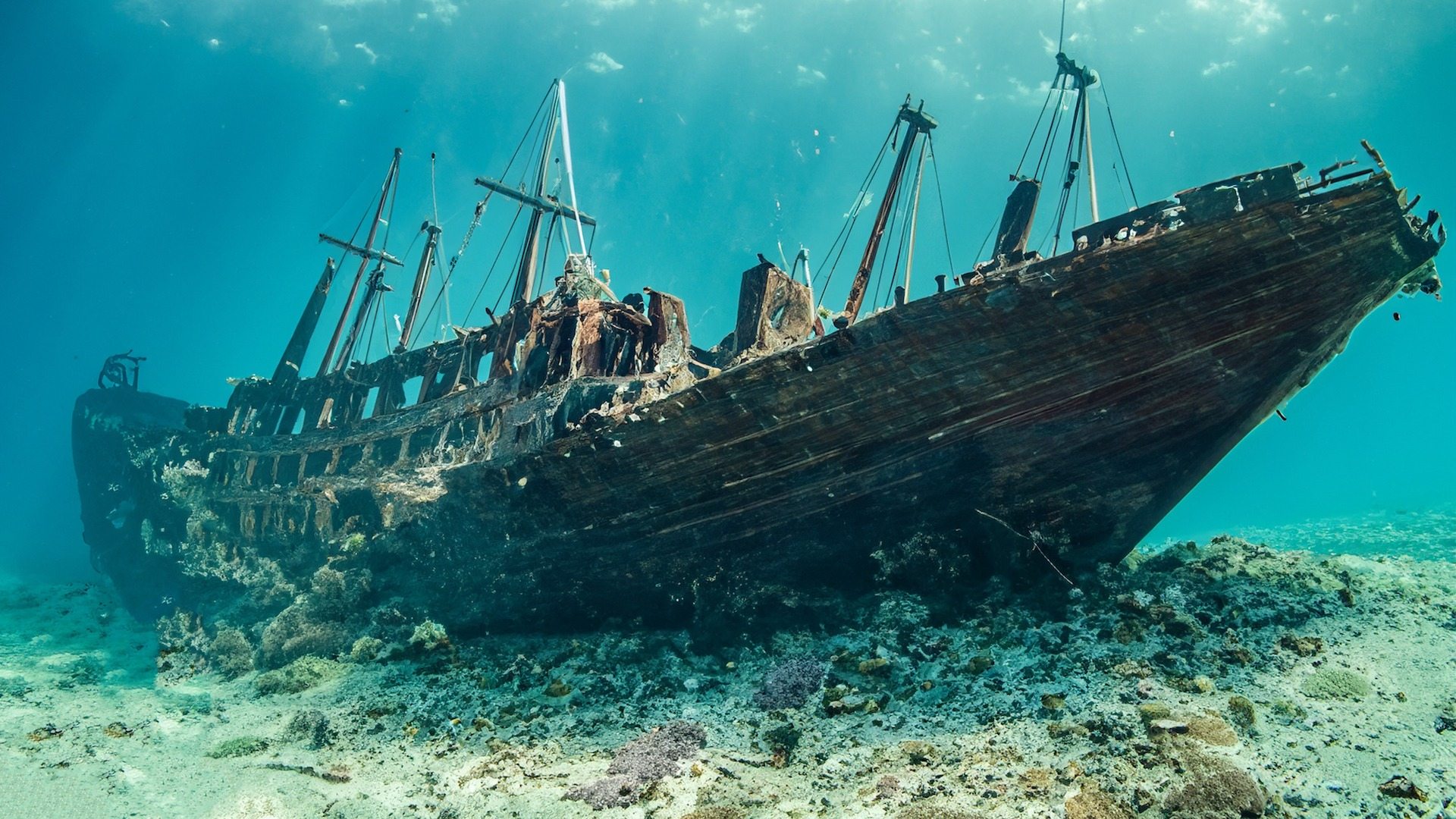
An international team of scientists has made a sensational discovery in the Black Sea, finding an ancient vessel that experts are already calling the world’s oldest completely preserved shipwreck. According to preliminary data, the ship has lain on the seabed for over two and a half millennia, virtually unchanged.
The unusual find was made during the Black Sea Maritime Archaeology Project expedition, which spent three years exploring the depths of the Black Sea. The project’s primary goal was to study ancient coastlines and the history of sea level change, but the research yielded far more impressive results.
The vessel, approximately 23 meters long, was found at a depth of almost two kilometers. It was the extreme conditions at such a depth that allowed it to be preserved in exceptional condition. The water here is virtually devoid of oxygen, preventing marine organisms from destroying the wood, and the absence of divers and currents protects the ship from mechanical damage. Scientists were particularly astonished by the fact that the rudder, rowing benches, and even some of the cargo stored in the hold were preserved at the site. This level of preservation is virtually unheard of among ancient ships.
Experts believe the vessel belonged to the ancient Greeks and was used for trading voyages across the Black Sea. Until now, similar ships were known only from depictions on ancient pottery. One of the most famous examples is the so-called “Siren Vase,” created around 480 BC.
This ancient Greek vase depicts the legendary hero Odysseus, tied to the mast of his ship to resist the enchanting song of the mythical sirens. The design of the depicted vessel is remarkably similar to that of the vessel found by archaeologists on the seabed, making the discovery especially valuable to historians.
Despite the enormous scientific value of the find, the researchers have no plans to raise the ship to the surface. They believe it would be much better preserved in its natural environment. For further study, specialists took only a small fragment of wood, which will allow radiocarbon dating to determine the vessel’s exact age.
The discovery itself was only part of a greater archaeological effort. During the expedition, dozens of historical objects from various eras were discovered on the Black Sea floor. Among them were 17th-century Cossack warships, Roman merchant ships with amphorae, and other ancient shipwrecks.
For millennia, the Black Sea served as a vital maritime route connecting various civilizations. Archaeologists are confident that its depths still conceal a multitude of priceless artifacts that could change our understanding of seafaring and trade in the ancient world.
 Discuss
More news
Discuss
More news