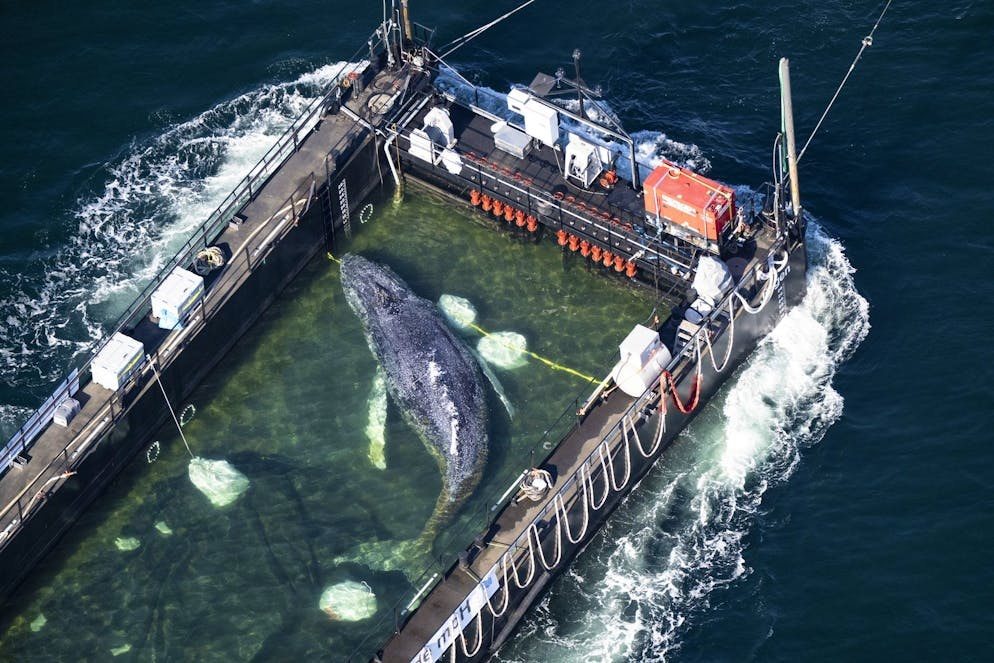
An alarming incident involving a humpback whale occurred in the Baltic Sea: the weakened animal, which had washed several times ashore, was returned to the open sea over the weekend. However, its further location remains unknown – the GPS sensor installed on the whale’s body does not transmit coordinates as planned. According to one of the sponsors of the private initiative, Karin Walter-Mommert, only vital-sign signals are being received, which suggests the whale is still alive. However, it is not yet possible to confirm this data from independent sources.
The lack of coordinates can be explained by the fact that such sensors only work when the animal rises to the surface. If the whale is killed and remains at depth, no position signal will be transmitted. Experts have previously noted that the chances of survival for a severely malnourished animal are extremely low. In the event of death, the body will likely not float to the surface due to the water’s pressure at depth, though as it approaches the shore, it may be washed ashore.
After the operation to free the whale, many questions remain. The ships Fortuna B and Robin Hood, which were involved in the transport, had left the Skagerrak area by Sunday, where the animal was released about 70 kilometers from Skagen. The details of the procedure itself are not disclosed, and there are no video materials, which confuses the public.
Mecklenburg-Vorpommern Environment Minister Till Backhaus said the barge should have had a video surveillance system installed to allow veterinarians to monitor the whale’s condition, but this was not done. Representatives of the private initiative, on the contrary, claim that they did not participate in the direct release of the animal and place responsibility on the ship crews.
According to them, the only representative of the project on board at the time of liberation was Jeffrey Foster of the Whale Sanctuary Project. He said that his colleagues were not allowed on the barge the morning before the release, so it was not possible to assess the whale’s condition immediately beforehand.
It also remains unclear exactly how the animal was returned to the water and whether it suffered additional injuries. Previously, footage surfaced showing the whale tied by the tail, which, according to marine biologists, is categorically unacceptable and can cause serious damage.
According to the shipping company, the operation was successful and was carried out with the safety of the crew and the animal in mind. It is noted that during transport, the whale repeatedly struck the barge’s walls due to strong sea conditions.
Despite the removal of the restrictive nets, the whale remained inside the barge for a long time, which, according to experts, may indicate extreme exhaustion and lack of strength for active movement.
At the moment, the animal’s fate remains unknown. Without GPS data, it is impossible to track its route, and the story of this whale may remain without a final answer.
 Discuss
More news
Discuss
More news