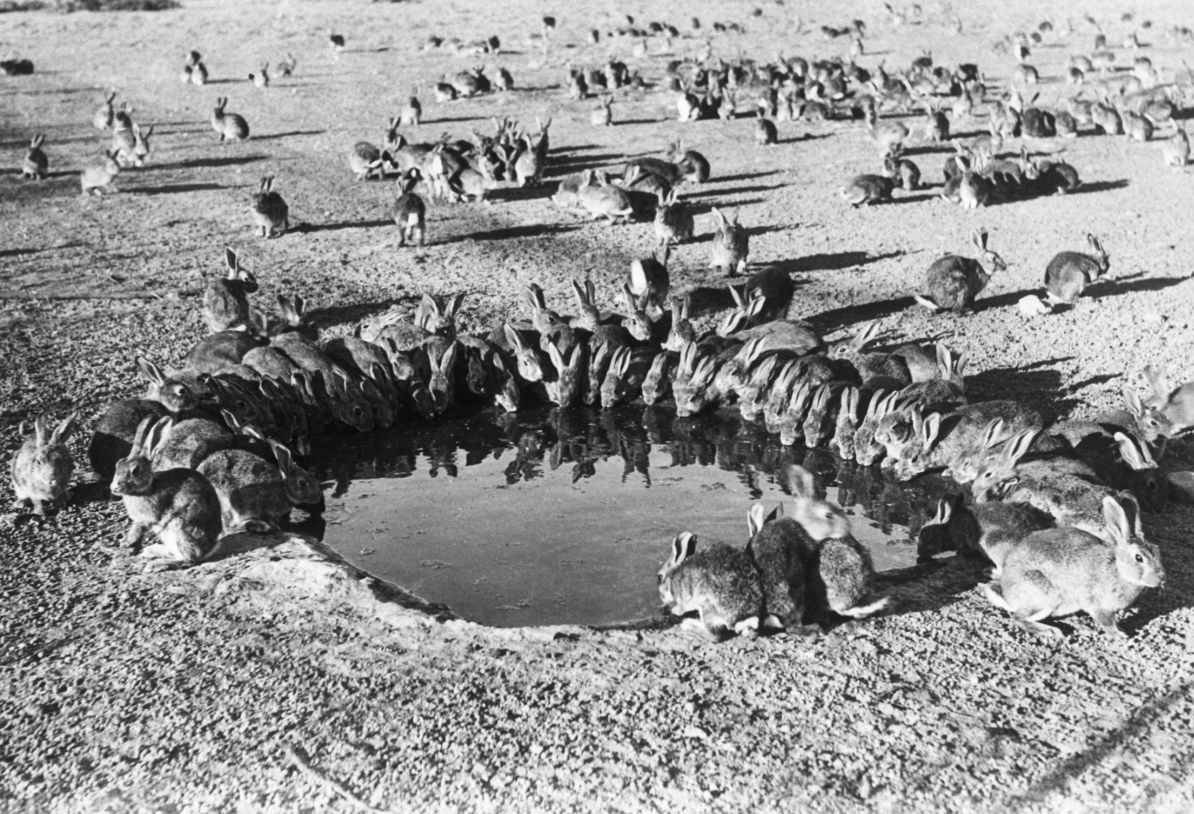
Imagine a country where hundreds of millions of rabbits roam freely across vast territories. It would seem logical to turn such an abundance into cheap meat. Yet in Australian supermarkets, rabbit meat remains rare and is often surprisingly expensive. Why is there so much “free” meat around, yet so little of it on store shelves?
How 24 rabbits changed Australia
The story began in the 19th century. In 1859, a settler named Thomas Austin released about 24 rabbits brought from Europe onto his property. He intended to hunt them.
However, the animals found virtually ideal conditions. Vast open spaces, abundant vegetation, and relatively few natural predators allowed the rabbits to multiply at an incredible rate.
Within a few decades, they had spread across a colossal area. The rabbits destroyed vegetation, competed with livestock for forage, damaged the soil, and seriously harmed agriculture.
Ultimately, what started as a hunting pastime turned them into one of Australia’s most notorious pests.
Why aren’t wild rabbits turned into food?
The main issue is their status. For decades, Australia has battled rabbits using shooting, trapping, fencing, and biological control methods. Consequently, for many Australians, the rabbit is associated primarily with an environmental threat rather than dinner.
But even setting aside public perception, economics matters.
Wild animals are scattered across a vast territory. They must be located, harvested, inspected, processed, chilled, and delivered to the consumer. All of this requires workforce, transport, equipment, and strict sanitary controls.
As a result, the “free” rabbit turns out to be anything but free.
And why not raise rabbits on farms? Farming operations also entail costs. Domestic rabbits must be protected against diseases that can spread from wild populations. This requires strict biosecurity measures, veterinary oversight, and specialized housing conditions.
Demand is another issue. If consumers are not accustomed to buying rabbit meat regularly, producers struggle to build large-scale, low-cost supply chains.
This creates a genuine paradox: while rabbits may exist in vast numbers in the wild, transforming them into a safe, affordable, and mass-market product is far more complex than it appears.
The Australian experience clearly demonstrates that an abundance of animals does not necessarily translate into an abundance of cheap meat. Sometimes, the most readily available raw material is the most expensive to process.
 Discuss
More news
Discuss
More news