For eighteen years, I was convinced that silence was the best way to protect our daughter. I believed that if she never learned of the tragedy, she wouldn’t have to live with that pain.
But my husband saw things differently.
On Hannah’s eighteenth birthday, he brought a small wooden chest from the garage and set it in front of her.
“This is for you,” he said.
Hannah opened the lid and saw two tiny baby hats, hospital ID bracelets, photographs, and a stack of letters.
Her name was written on every envelope.
She didn’t yet know that these things hadn’t belonged to her alone.
Hannah had a twin sister.
Her name was Rosie.
The girls were born just eleven minutes apart. Hannah cried loudly, while Rosie barely made a sound. We were young parents, and we couldn’t believe our good fortune.
But nine days after we brought them home, Rosie died suddenly.
The cause was identified as Sudden Infant Death Syndrome.
I couldn’t bear to look at Rosie’s crib or the photographs. I put away everything that reminded me of her. My husband and I hardly ever spoke about what had happened.
Then we made a decision that would shape the next eighteen years: we wouldn’t tell Hannah anything.
When she was seven, my husband said for the first time:
“Maybe it’s time to tell her?”
I refused.
I always had a reason to put off the conversation.
And so, “not right now” turned into eighteen years.
Our parents, siblings, and other relatives knew the secret. Everyone kept quiet.
On every one of Hannah’s birthdays, I would smile, set the table, and wish her a happy birthday. But inside, I was thinking only one thing:
“Rosie would have been the same age today.”
My husband grieved differently. After every birthday, he would go out to the garage. I thought he just needed some time alone.
It turned out he was writing letters there.
One letter for each of Hannah’s birthdays.
Eighteen letters—about Rosie, about what she was like, and about the things he had wanted to tell his daughter one day.
And then, on her eighteenth birthday, he decided he would stay silent no longer.
When the guests had left, he placed a chest in front of Hannah and said:
“You weren’t born alone.”
At first, she didn’t understand.
“You had a twin sister. Her name was Rosie. She lived for nine days.”
Hannah looked at me.
“Everyone knew?”
I nodded silently.
Then she said:
“Everyone knew about my sister—except me?”
Her voice held less grief than a sense of betrayal.
She cried and was angry; she couldn’t understand why her parents had decided for her that she wasn’t capable of knowing her own story.
A few days later, Hannah began reading her father’s letters. In one of them, he wrote that he had wanted to tell her the truth when she was twelve.
She looked up and said:
“I don’t feel guilty for having survived. I wish I’d had the chance to know her.”
A week later, Hannah asked to be taken to the cemetery.
The three of us stood by the small headstone.
Hannah touched the stone and said softly:
“Hello, Rosie.”
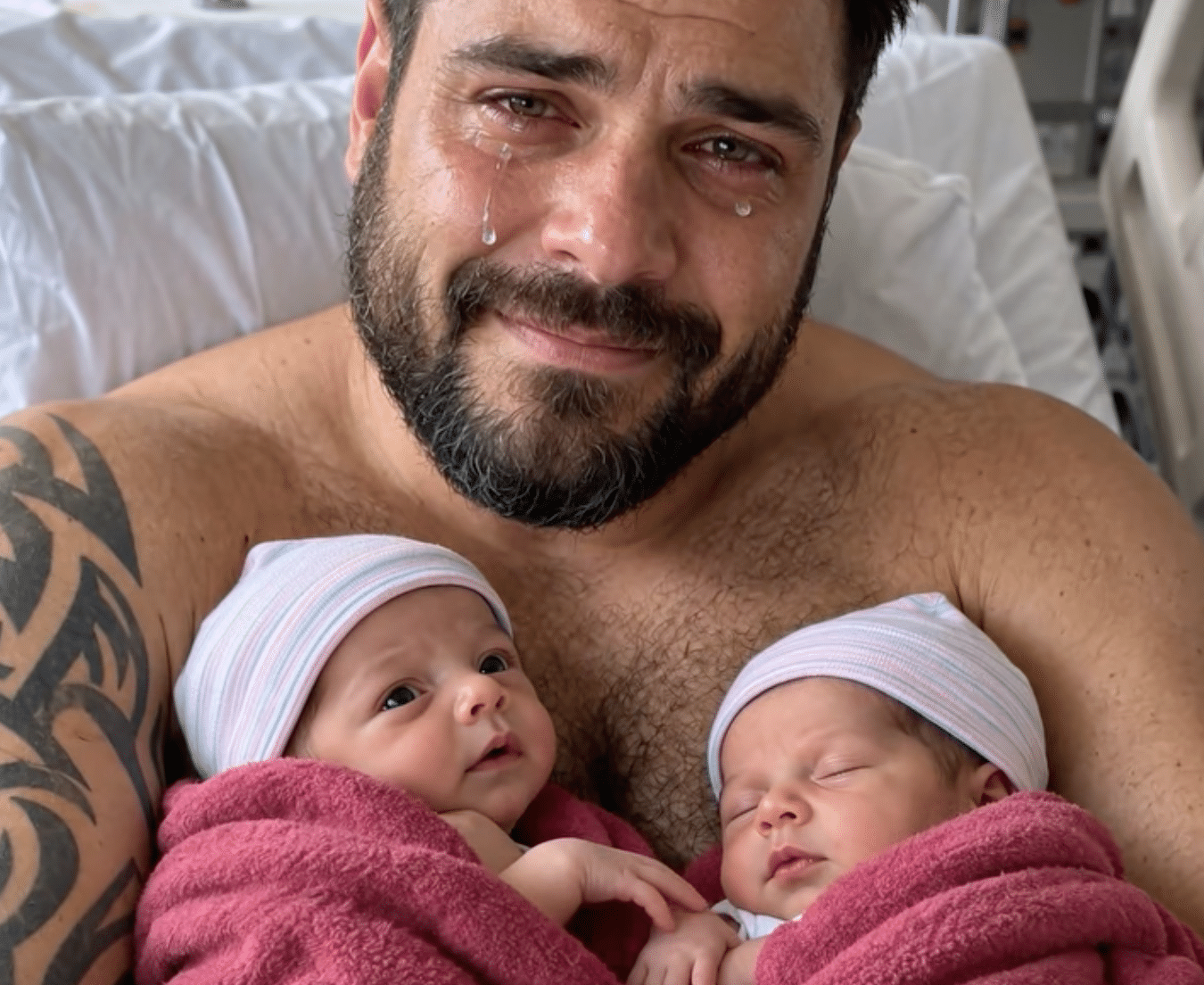
After that, we stopped hiding the photographs. We put the picture of the two newborn girls lying side by side back on the wall.
Now, on September 9th, we celebrate Hannah’s birthday while also remembering Rosie.
Rosie lived for only nine days.
But those nine days were enough for her to remain, forever, her parents’ daughter and Hannah’s sister.
Now, her name is no longer spoken in a whisper.
 Discuss
More news
Discuss
More news