During the renovation of an old estate in Aberdeenshire, a construction worker clearing away debris stumbled upon a strange bundle. Buried amidst the dirt and rubble lay a shapeless mass of fabric and paper, coated in a thick layer of soot. The material had dried out and decayed so much that it practically crumbled at the slightest touch. Yet, on one of the torn sections, the man noticed the faint, barely discernible traces of an antique engraving.
Instead of discarding the find along with the rest of the trash, the worker placed it in an ordinary bag and took it home. There, the mysterious bundle sat for several years, all but forgotten.
Eventually, Brian Crossan, a local schoolteacher with a keen interest in historical maps, came into possession of the item. He quickly realized that unfolding it himself would be risky—the fragile paper could easily disintegrate into dust. Consequently, it was handed over to specialists at the National Library of Scotland.
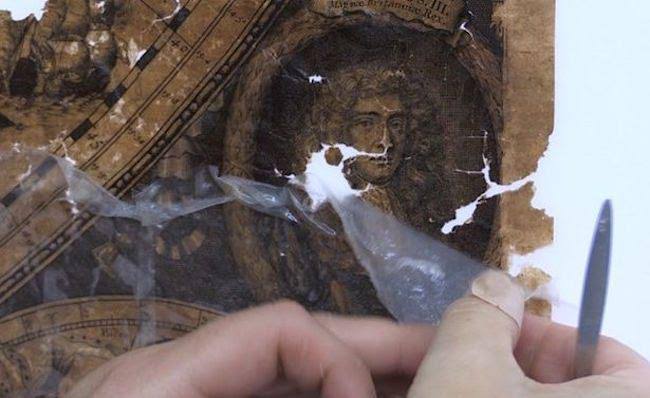
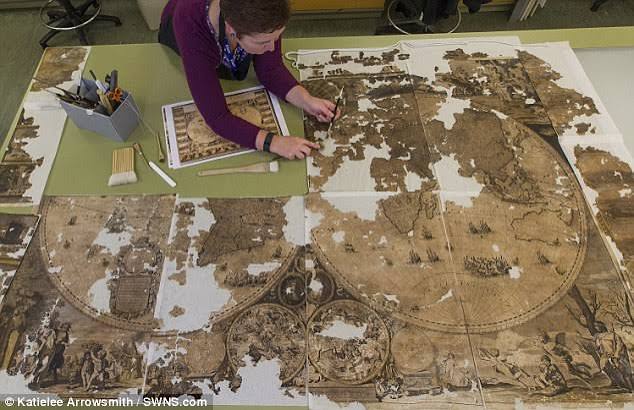
The conservators faced an exceptionally difficult task. Years of accumulated soot, insect damage, decay, and parched fibers had fused the document into a nearly inseparable lump. Over several months, the experts painstakingly cleaned the surface and, millimeter by millimeter, smoothed out the countless creases.
Gradually, something extraordinary emerged: a massive wall map, measuring about 2.1 by 1.5 meters, created in the late 17th century by the renowned Dutch engraver Gerard Valck. Its value was immense—until that moment, only two other surviving copies were known to exist anywhere in the world.
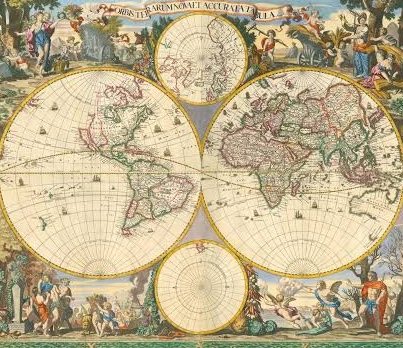
Yet, the central question remained unanswered: how did a work of such significance end up among the construction debris? The investigation revealed a striking story. Judging by its condition and the circumstances of its discovery, someone—likely in the 19th or early 20th century—had crumpled the precious map into a tight ball and shoved it into a stone chimney. It appears it was used as cheap insulation to block a cold draft.
And so, a work of cartographic art that had survived for three centuries was reduced to a mere chimney plug.
Only a construction worker’s chance attentiveness saved it from destruction. A few seconds more, and this exceptionally rare historical relic could have ended up in a landfill, vanishing forever from the history of world cartography.
 Discuss
More news