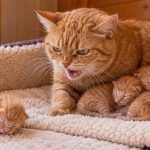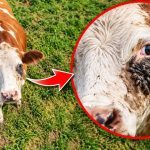
It was a sunny July afternoon in Millbrook, Ontario, when photographer Dave sent his drone over a peaceful green pasture. Just a week earlier, he had helped rescue a newborn calf that had become trapped beneath an electric fence. This time, he returned hoping to capture some beautiful aerial footage of the farm.
As the drone descended, several curious cows gathered beneath it, looking up at the buzzing machine without showing any signs of fear. Dave lowered the camera to get a better view of the animals, moving slowly across the field.
But suddenly, something unusual caught his attention.
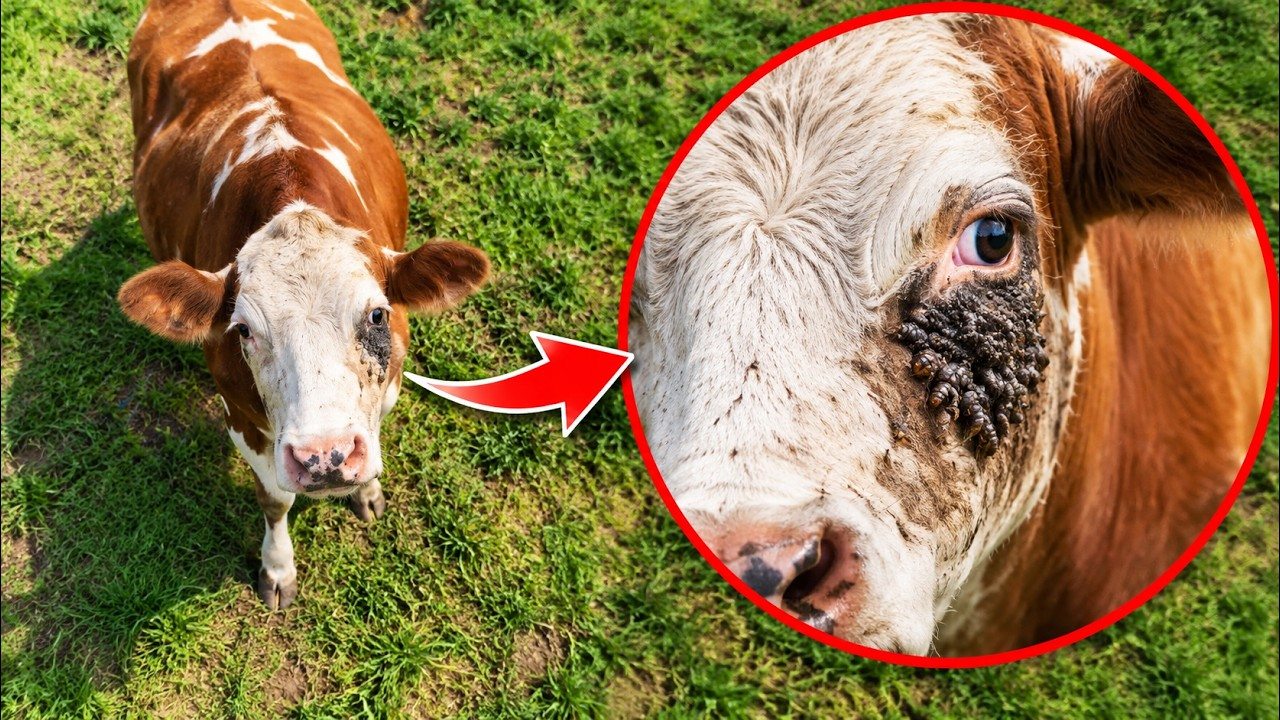
Near a resting calf stood a white cow with dozens of strange, stiff objects sticking out around her nose. At first, Dave thought the animal had pushed her muzzle into some dry vegetation. However, the closer he looked, the more disturbing the sight became.
He zoomed in with his 4K camera and froze.
The cow’s face was covered in porcupine quills. Sharp spikes were buried deep in her muzzle and nostrils, making her look like a living pincushion.
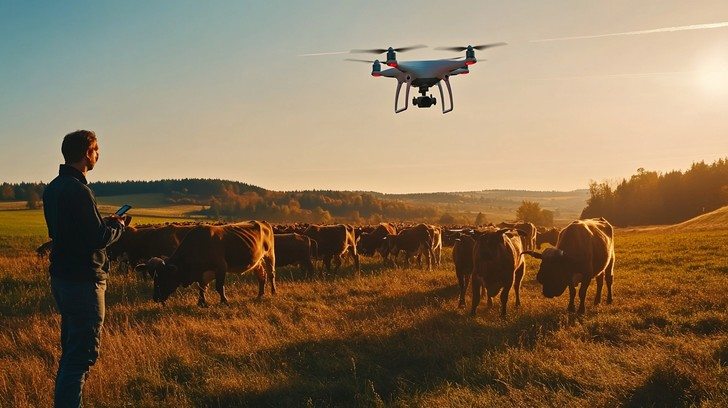
Dave immediately understood that this was no ordinary injury. Porcupine quills have tiny backward-facing barbs that make them extremely difficult to remove. Every movement can push them deeper into the tissue, potentially causing serious infections and dangerous complications.
Another problem: his drone battery was almost dead. With only minutes of flight time remaining, Dave managed to zoom in on the identification tag attached to the cow’s ear. He caught one important detail before bringing the aircraft down.
Her name was Linda.
Dave raced to the farmhouse and showed the farmer and his wife the shocking footage. They immediately gathered their medical supplies and hurried toward the pasture. Unfortunately, the herd had already moved, making Linda difficult to locate among the other animals.
Dave quickly replaced the drone battery and launched it again. From above, he scanned the enormous field until he spotted the injured cow standing near a watering pond.
The farmer used a bucket filled with corn and oats to lure Linda away from the rest of the herd. Once she was safely separated, he carefully administered a local anesthetic and began removing the embedded quills.
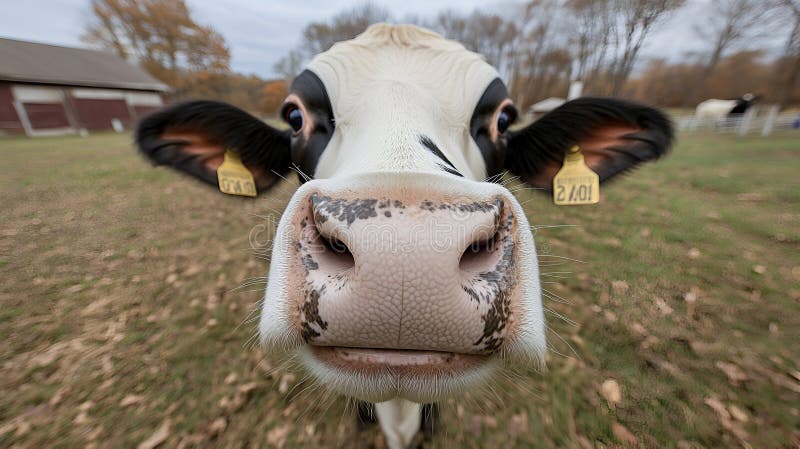
It was a delicate procedure. Each spike had to be extracted carefully, especially when one broke during removal. The farmer patiently worked to retrieve the buried fragment without pushing it farther beneath the skin.
After every quill was removed, Linda received antibiotic treatment and some fresh grain as a reward.
Soon afterward, she could walk normally and return to her calf.
What began as an ordinary drone photography session had turned into an unexpected rescue mission. And Linda might never have received help so quickly if Dave hadn’t noticed that one strange detail on his camera screen.
Sometimes, saving a life depends on simply taking a closer look.
Make the opening more suspenseful. Clarify Dave’s connection to the farm.
 Discuss
More news