An ordinary summer day in Florida unexpectedly turned into a dangerous rescue operation. A massive black bear weighing approximately 375 pounds—almost 170 kilograms—appeared in a residential area near Alligator Point. The animal wandered between houses in search of food, seriously frightening residents.
To avoid a potential conflict and simultaneously protect the animal, wildlife officials decided to tranquilize it and then transport it away from the populated area.
But things didn’t go according to plan.
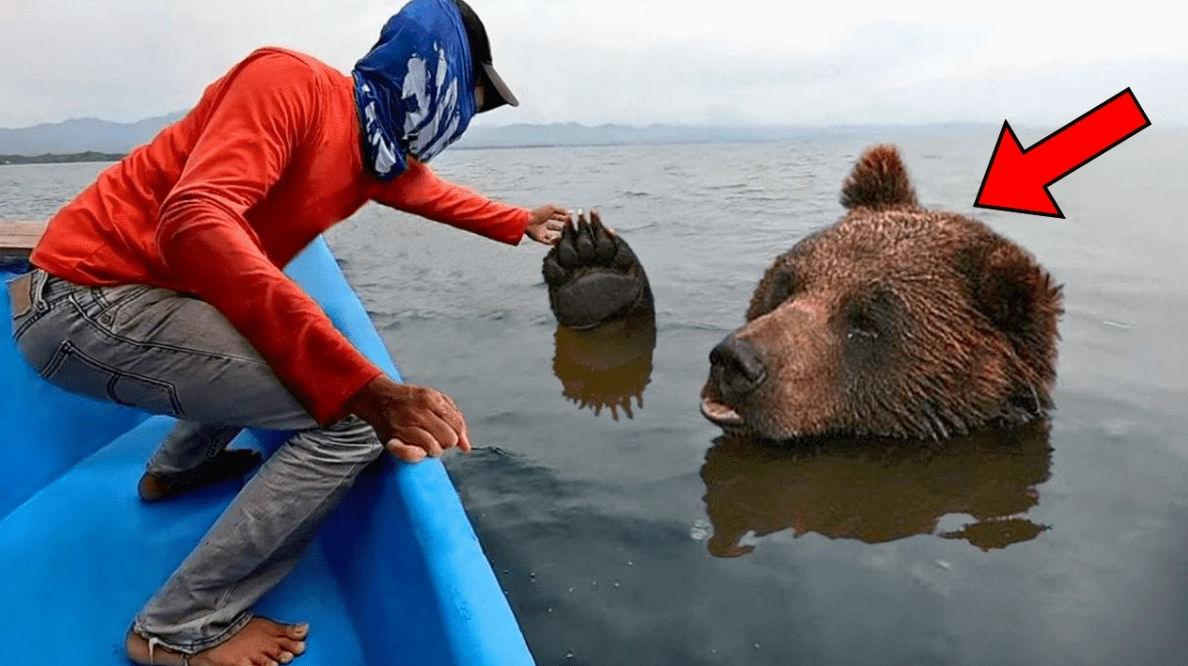
After being hit by a dart, the bear, instead of calming down, became extremely agitated. The frightened animal took off and headed for the shore. Moments later, the enormous animal was in the water and began rapidly moving away from the shore.
At first, it seemed the bear was trying to escape people. However, the drug’s effects soon began to intensify. Its movements became increasingly slow, its muscles weakened, and soon the animal could no longer maintain its position on the surface.
The bear began to sink.
Among the staff members observing the scene was Florida Fish and Wildlife Conservation Commission biologist Adam Warwick. Knowing that every second counted, he didn’t wait for additional assistance. He took off his shoes, waded into the water, and swam toward the drowning animal.
Reaching the bear was only the first part of the rescue. The weakened and disoriented animal instinctively tried to stay afloat and actually began climbing on the rescuer. This posed a huge danger: the animal’s weight could easily pull a rescuer underwater.
Despite the risk, Adam managed to hold on to the bear. He grabbed its neck, stabilized its position, and began swimming with all his might toward shore. He had to drag the approximately 170-kilogram animal through the water.
The distance to land was approximately 25 yards—about 23 meters. Every meter was difficult, but the biologist kept moving until he finally managed to bring the exhausted bear to shallow water.
The rescue operation ended safely. The animal suffered no serious injuries, and Adam himself escaped with only a minor scratch.
Afterward, the staff used a heavy tractor to load the bear and transport it to safety carefully. The animal was subsequently transported to the Ocala National Forest, where it could continue its life in the wild.
What began as a routine wildlife relocation operation nearly ended in tragedy. However, thanks to one man’s determination, the drowning bear was given a second chance, and the story will forever remain one of the most extraordinary examples of wildlife rescue.
 Discuss
More news
Discuss
More news