Thousands of images disappear into the void of social media every single day. They go viral in seconds, racking up millions of views across endless feeds, until the truth behind them gets buried. Tracing where a clip originated—or what it actually captured—becomes almost impossible.
On September 19, a short video dropped online and immediately ignited a storm of debate. The footage, posted by the account @unitelbo, was filmed on a river deep in Colombia. At first glance, viewers see only a dark, massive silhouette cutting through the murky water. It looks like an ordinary crocodile or a heavy log drifting downstream. But as the camera zooms in, reality sets in.
It isn’t a log, and it isn’t a crocodile.
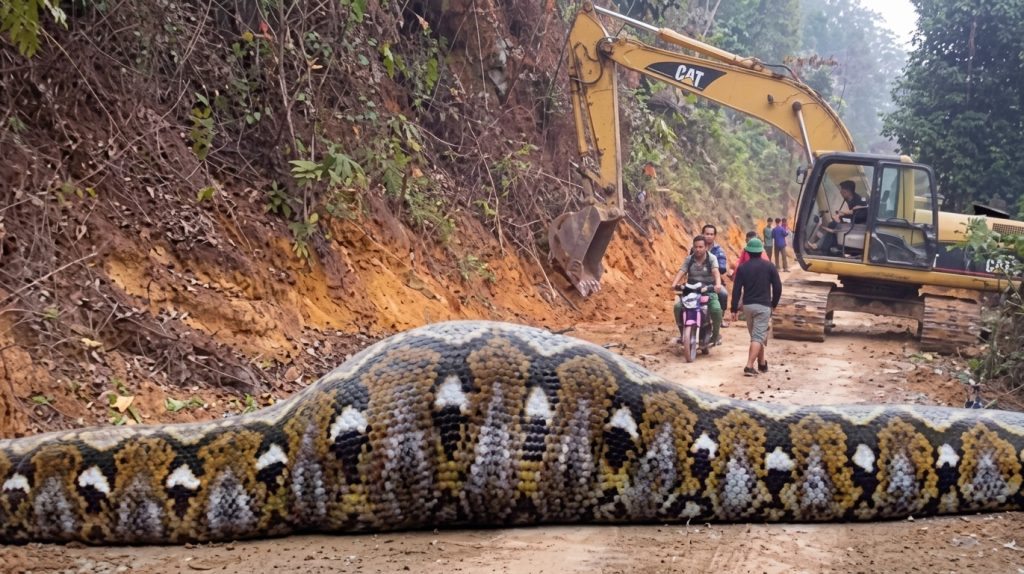
Gliding smoothly through the river is a colossal anaconda of staggering proportions. The tension spikes the moment you realize what the serpent is doing: it is actively devouring massive prey mid-swim. The recording captures every ripple of the giant’s movement as terrified onlookers film from a dangerously close distance.
Social media exploded instantly. Some viewers marveled at the terrifying elegance of Colombia’s wildlife, while others admitted to pure horror, commenting that they would have passed out on the spot if they were in that boat.
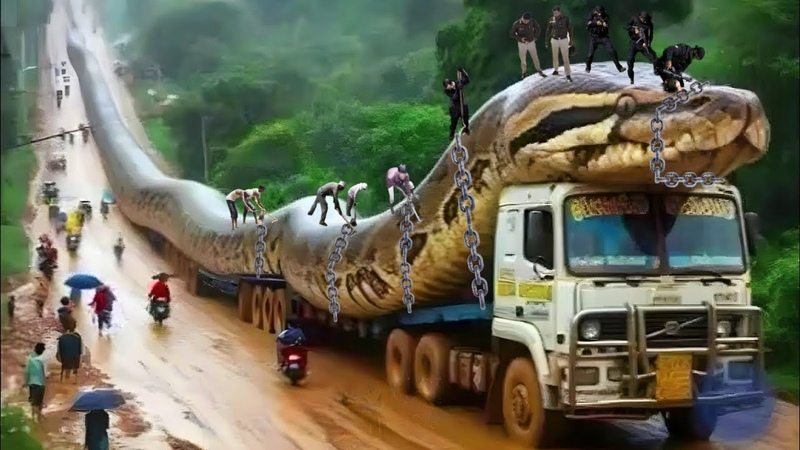
Yet, it wasn’t the sheer size of the river monster or its gruesome meal that truly stunned millions of people. It was what happened at the very end of the clip.
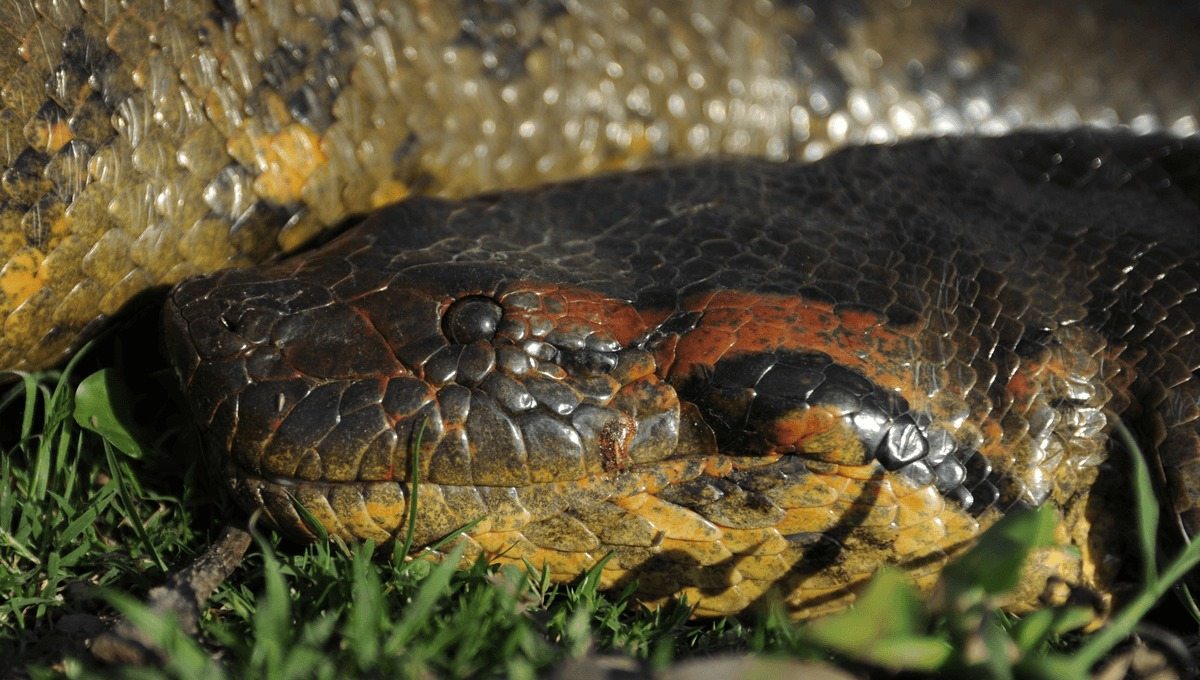
As the leviathan finishes its maneuver, it slowly turns its massive head toward the boat, freezes, and stares straight into the camera lens. That cold, calculated gaze left viewers with one chilling question: what would have happened if the boat had been just a few feet closer?
 Discuss
More news
Discuss
More news